
“Lift heavy things” is one of the 10 Primal Blueprint Laws, but that doesn’t mean you must spend hours in the gym. Contrary to popular belief, strength training doesn't require heavy weights and expensive machines. That's certainly one way for people to get an effective workout, but you can get quite strong and fit using just compound bodyweight movements.
The four exercises I call the Primal Essential Movements represent actions which our bodies are designed to execute without injury and on a daily, near-constant basis—movements that were essential to our survival for two million years.
The beauty of the Primal Essential Movements is that they can benefit anyone from a true fitness beginner to an experienced athlete or gym buff. You can adjust the difficulty up or down by modifying the movements or adding additional weight. You can bust out a quick set between meetings or construct an entire structured workout around these movements.
Whatever you do, though, you’ll only reap the benefits if you use proper form. Start by familiarizing yourself with the basics and go from there.
The 4 Primal Essential Movements
Push-ups
Probably the single greatest muscle-building exercise of all, push-ups deserve more respect than they get from the strength community. Yeah, the bench press is sexy, but it can lead to rotator cuff injuries, and it neglects the core-stabilizing aspects of the push-up. The push-up also allows for full scapular range of motion, whereas the bench press requires you to retract the scapulae for the duration in order to preserve your shoulders.
Movement Basics: Start from a plank position with hands flat on the ground and shoulder width apart, arms extended, fingers pointed forward. Lower your body until your chest (or nose) touches the ground. Keep your core and glutes tight and a neutral spine and neck.
Simplified Progression for Beginners (numbers in parentheses are the consecutive reps you should be able to complete in order to progress to the next level):
Standing wall push-ups (male 50; female 40)
Knee push-ups (male 50; female 30)
Incline push-ups with a hip-height object like a countertop or secure table (male 50; female 25)
Movement Mastery: male 50 push-ups; female 20 push-ups
Learn more about how to do a push-up, common form mistakes, and the benefits of doing push-ups in THIS POST.
Pull-ups
Climbing a tree to escape a predator, pursue prey, or reach the heights of a particularly bountiful fruit tree. Scaling a cliff to nab a nest full of fatty, nutrient-dense bird’s eggs. These situations called for well-developed “pulling muscles.” Grok wasn’t doing strict military pull-ups, but he was using the corresponding muscles on a near-daily basis.
Movement Basics: Keep your elbows tight, tuck your chin (try to make a double chin), retract your shoulder blades (to protect your shoulders). Without flailing or using your lower body, lead with your chest and pull your body up using an overhand grip until your chin passes the bar. When lowering, never fully protract your shoulder blades. Don’t lead with your chin; keep it tucked throughout.
Simplified Progression for Beginners:
Chair-assisted pull-ups (male 20; female 15)
Chin-up (inverted grip) (male 7; female 4)
Movement Mastery: male 12 pull-ups; female 5 pull-ups
Learn more about proper pull-up technique in THIS POST.
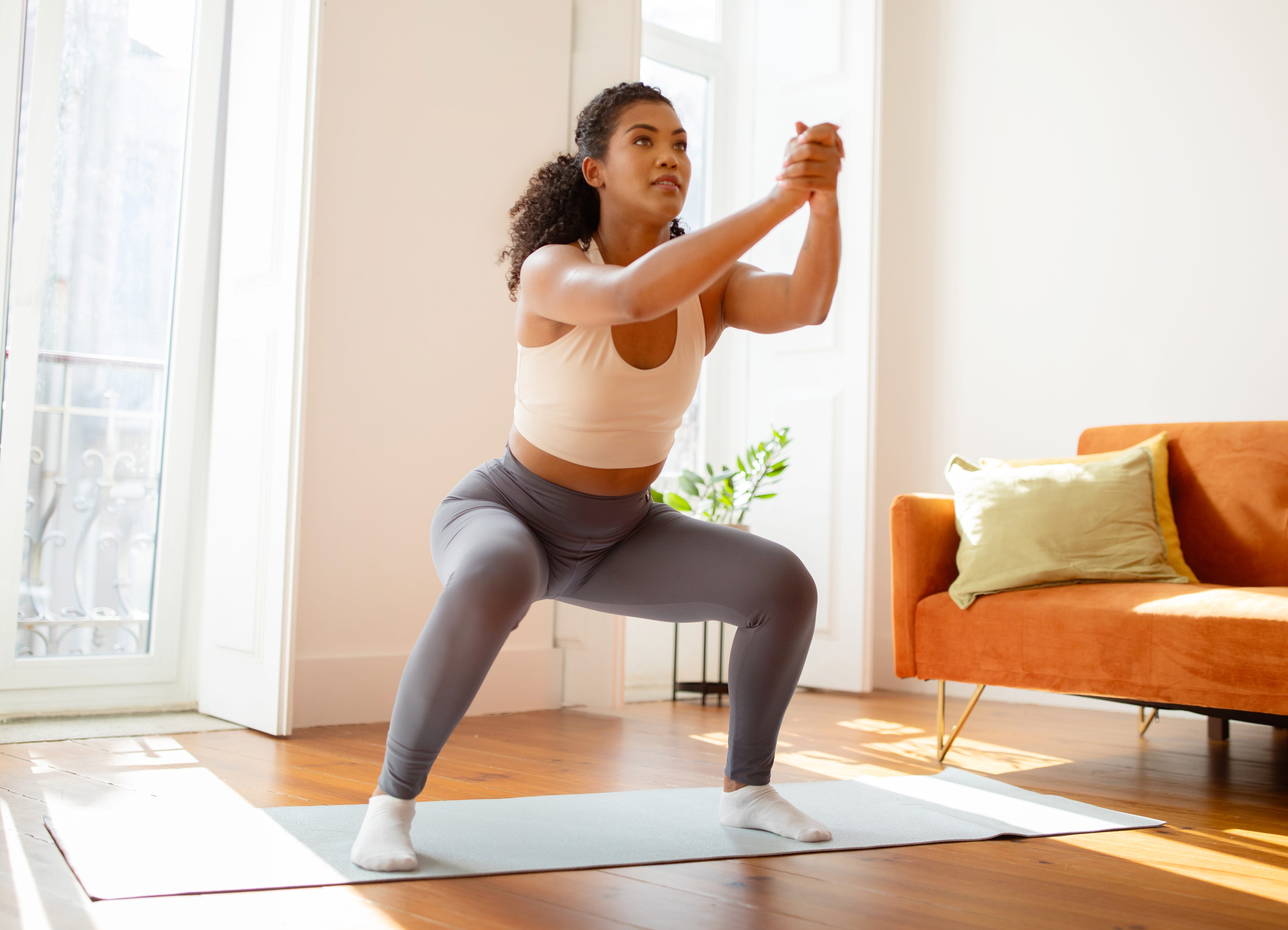
Squats
Watch kids at play. They squat effortlessly. It’s second nature. And for many modern hunter-gatherers, the squat represents the default resting position. Most of us adults, however, look for a chair when it’s time to rest. Not to mention how we bend (incorrectly I might add, compromising the spinal discs) to pick stuff up. Is it any wonder why many of us have poor mobility when it comes to squatting?
Movement Basics: With feet at or around shoulder width (whatever's most natural) and toes either forward or pointing slightly outward, lower by pushing your butt back and out until your thighs reach at least parallel. Push through the feet to return to standing. Keep the weight on the heels and a tight, neutral spine throughout the movement.
Simplified Progression for Beginners: Assisted squat using a pole or other support object while lowering into squat (male and female 50)
Movement Mastery: male and female 50 full squats
Find more technique tips HERE.
Planks
The “core” refers to the muscles that run the length of the trunk and torso. Most gym-goers “work the core” with a series of predictable movements. Sit-ups, crunches, ab machines, ab pulldowns... notice a pattern? They’re all abdominal workouts, but the core is much, much more than just the abs. What about the lower back? The hip flexors? The obliques? Heck, even breaking the core up into individual parts at all completely misses the point.
Everyone wants the six-pack, the beach muscles, and they completely miss the fundamental purpose of the core: to provide a stable base for the rest of the body. The best way to “work the core” is through plank progressions.
Movement Basics: Your body is a plank, as the name suggests. You are a single cohesive unbroken body, a straight line from head to foot. Elbows/forearms and toes are your only points of contact with the ground. Keep the core engaged.
Simplified Progression for Beginners:
Forearm/knee planks (male and female, 2 minutes)
Hand/feet planks (male and female, 2 minutes)
Movement Mastery: male and female, 2 minutes
Details about proper plank technique and plank variations can be found in THIS POST.
How to Get Started with the Primal Essential Movements
Twice a week, warm up your body and joints warm with some gentle movement, then engage in a total body workout using the Essential Movements. Your goal should be mastery of all four movements for three sets.
Once you've achieved mastery and want more, then add some weight (weight vest, kettlebell, sandbag, barbell, etc). Otherwise, maintaining movement mastery or bumping up the rep counts will keep you fit, lean, and strong.
Mark’s Daily Apple is still under construction. My team and I are actively working to repost the archives. Check back regularly to find posts that are new to you and revisit old favorites. Looking for a specific post? Let us know here.
You can help more people find us by spreading the word:
* This blog reflects my personal views and opinions and isn’t intended as medical advice, but I hope it will be informative and inspiring as you pursue a healthy, fulfilling life.